What it does
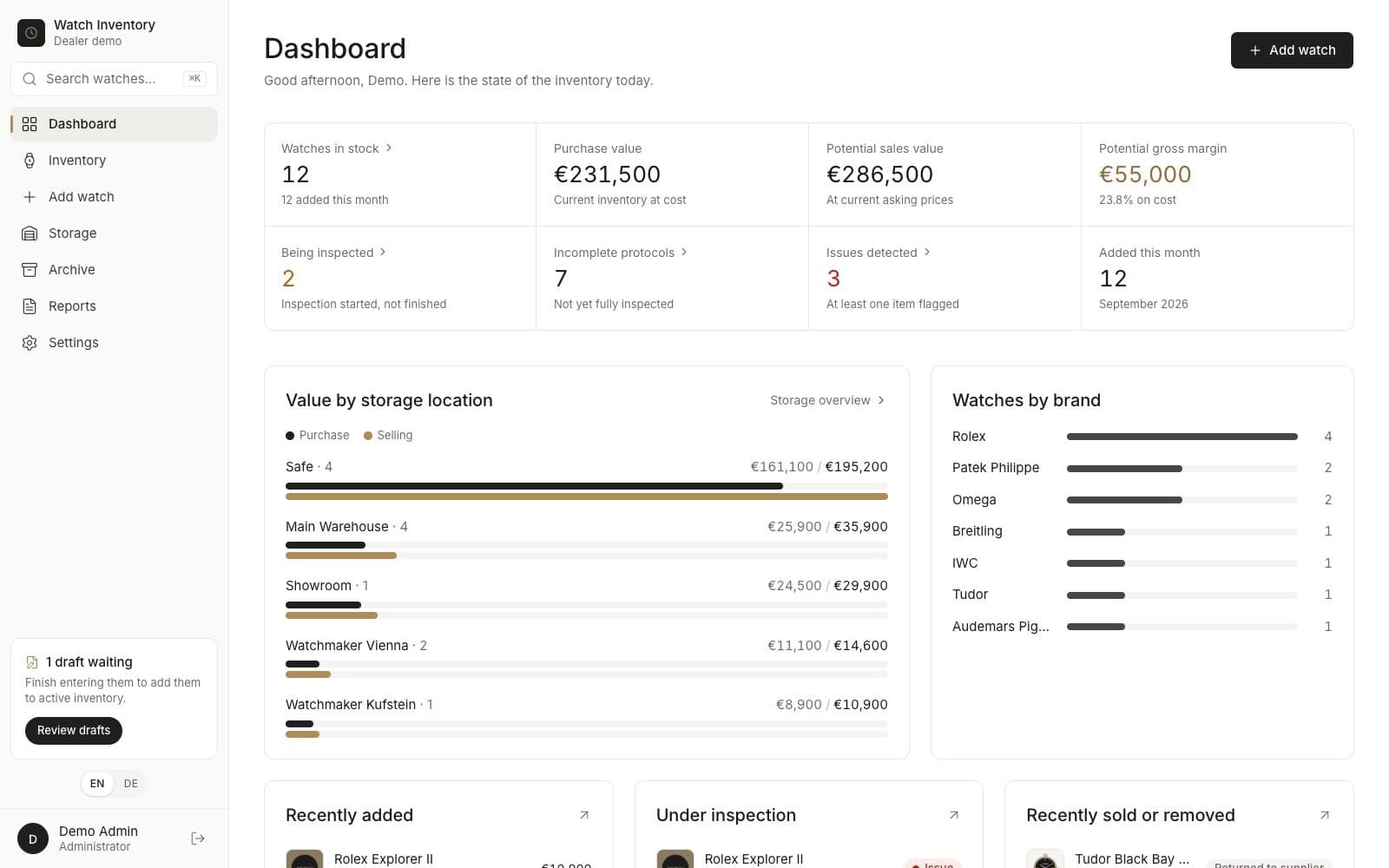
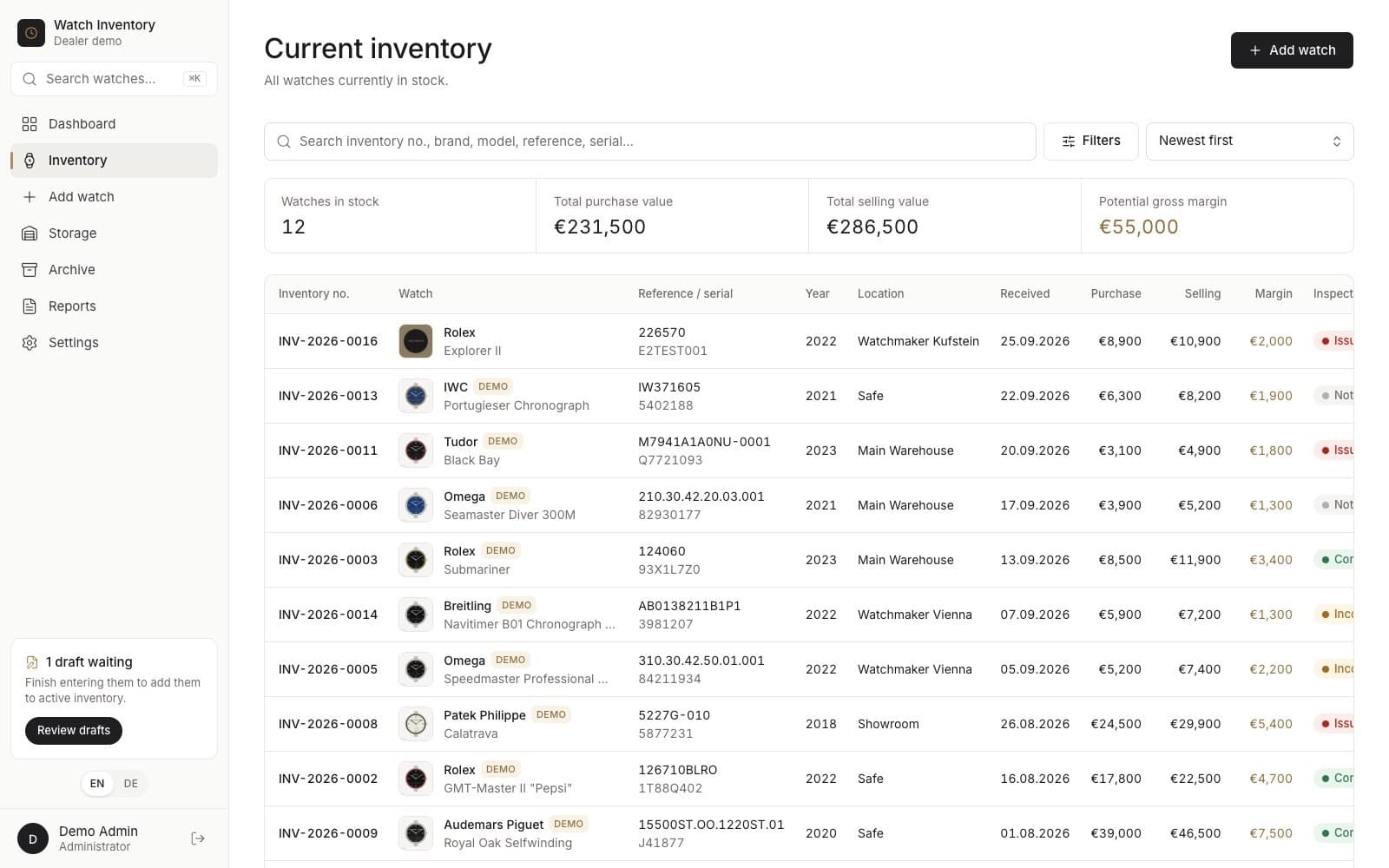
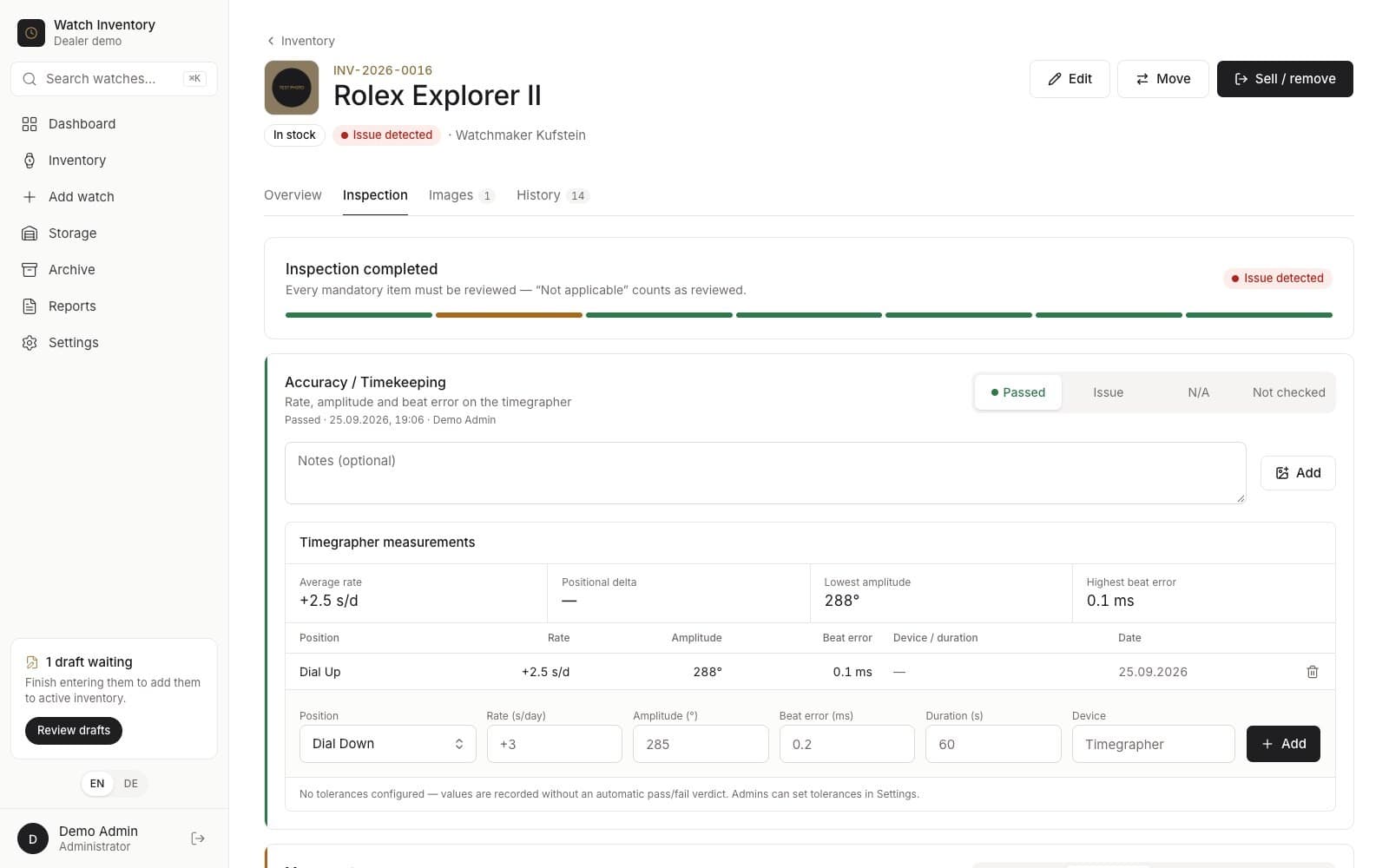
The dealer buys and sells luxury watches. Each watch passes through a lot of hands. Purchase, photos, a spot in the safe or at the watchmaker, a technical check on the timegrapher and finally the sale.
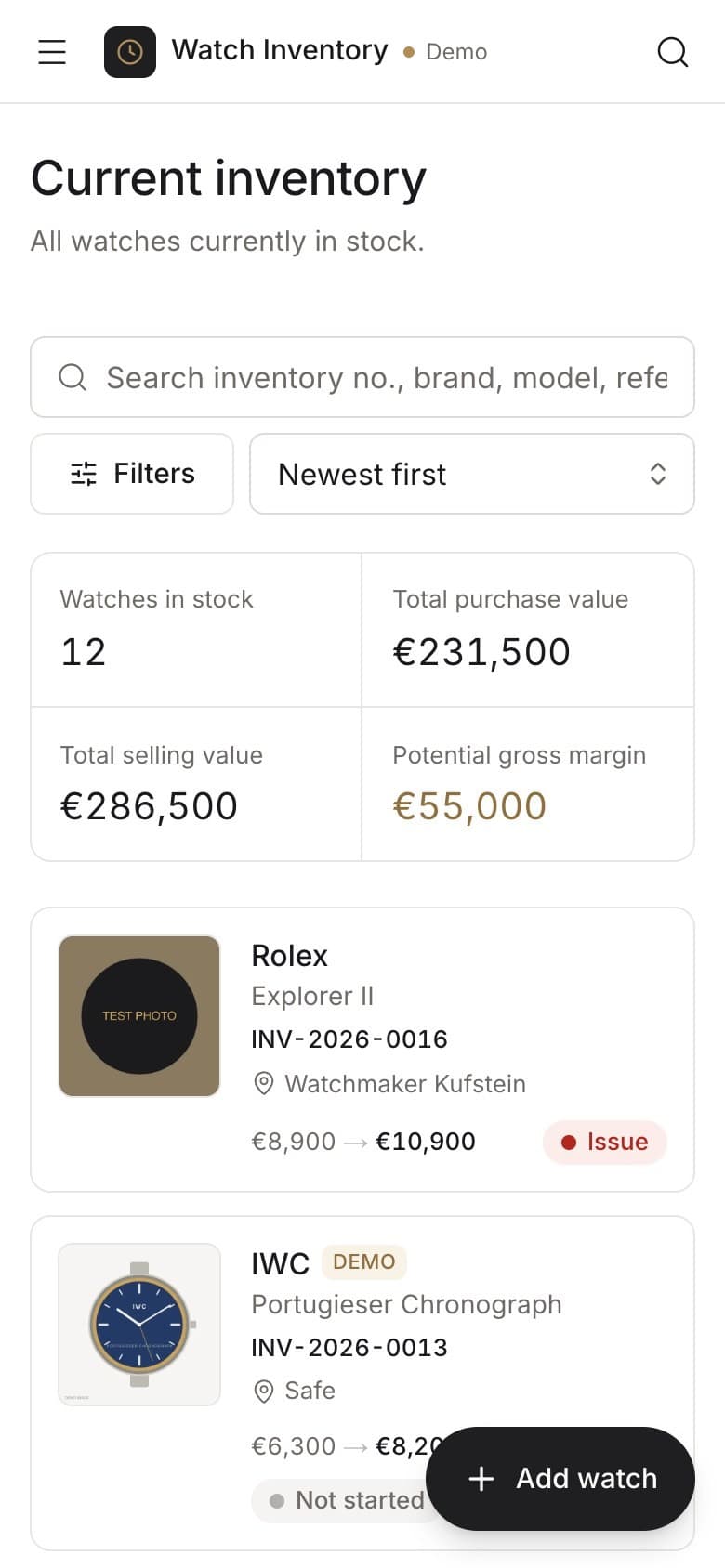
They wanted one place that shows where every watch is, what it cost, what shape it's in and who touched it last. Quick enough to use on the phone when a watch arrives at the counter.
The numbers
1 day
from brief to the first full version
€0
license fee, the client owns code and data
0
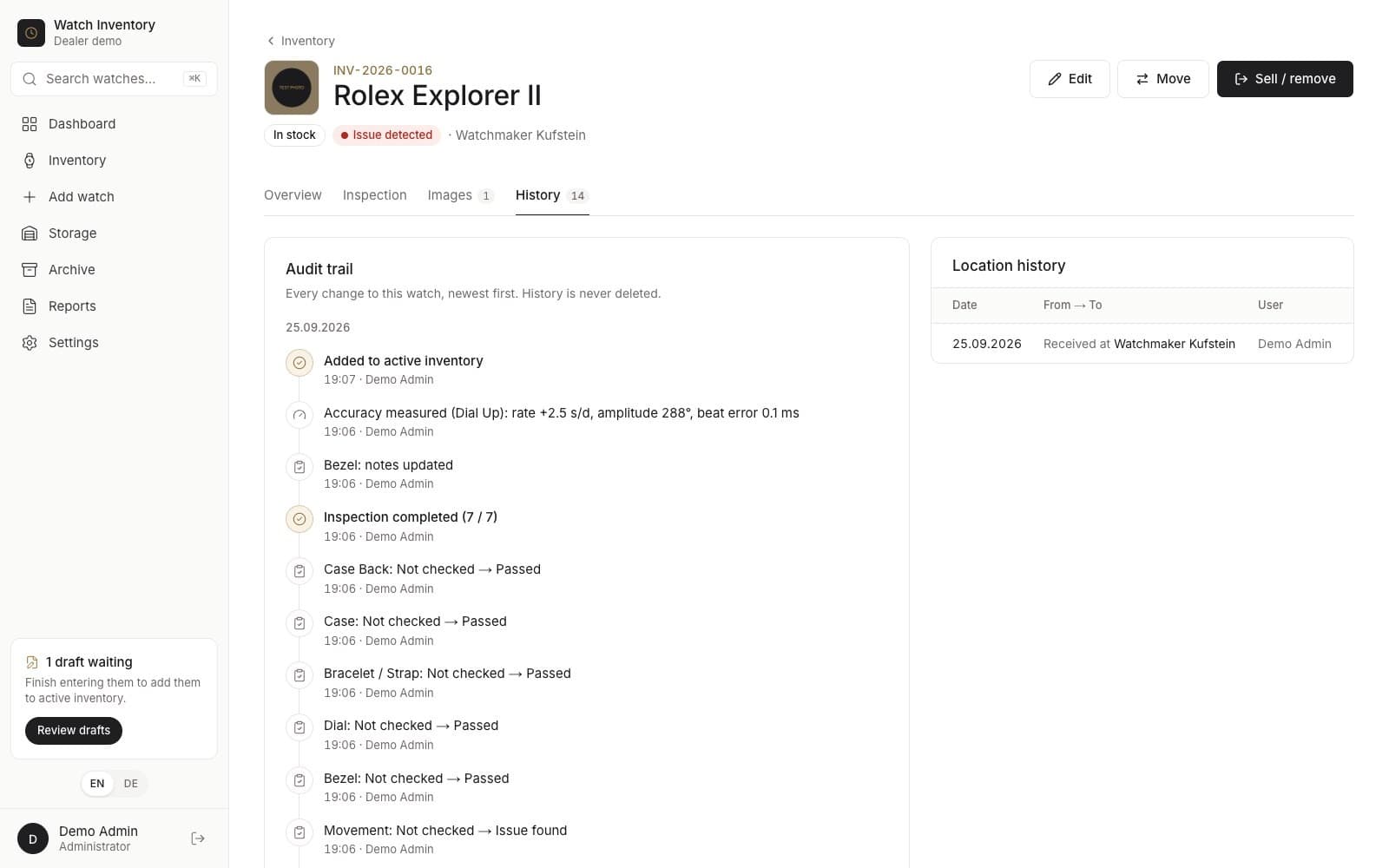
records that can ever be deleted
Build time
- Planned in the quote3 weeks
- First full version with Claude1 day
The rest of the time goes into testing with the client, not into writing code.
How it works
No AI inside, on purpose. An inventory is a system of record, so it has to be exact and a little boring. The important rules live in the database itself, so no button and no bug can break them.
- InputWatch arrivesPhoto from the phone camera, basic data
- PersonIntakeSix short steps from basics to inspection
- CodeDatabase rulesUnique inventory numbers, no deletes, every change logged
- PersonInspectionChecklist and timegrapher values per position
- OutputOverviewDashboard, reports and CSV for the accountant
- [ Next.js ]
- [ Supabase ]
- [ Postgres ]
- [ Row level security ]
- [ TypeScript ]
- [ Tailwind CSS ]
- [ EN / DE ]
Screens
What it brings
One source of truth
No more spreadsheets and notes. Stock, value and margin are always up to date.
Nothing gets lost
Sold watches go to the archive, never to the bin. The full story stays.
They own it
No monthly license. It starts on free hosting tiers and costs around $45 a month if it ever needs the paid plans.
Right people, right rights
Staff add and inspect watches. Only admins archive, reopen or manage users.
Good to know
→
AI Kitchen Planner